Highest Jellyfish in Virginia Today
Every beach we track, ranked by today's jellyfish chance from the latest VIMS and NOAA sea nettle maps. Tap a name for the beach report, maps, and area.
Best beaches to avoid jellyfish today · Worst jellyfish beaches today
Latest Source Maps
VIMS jellyfish map for today, Virginia
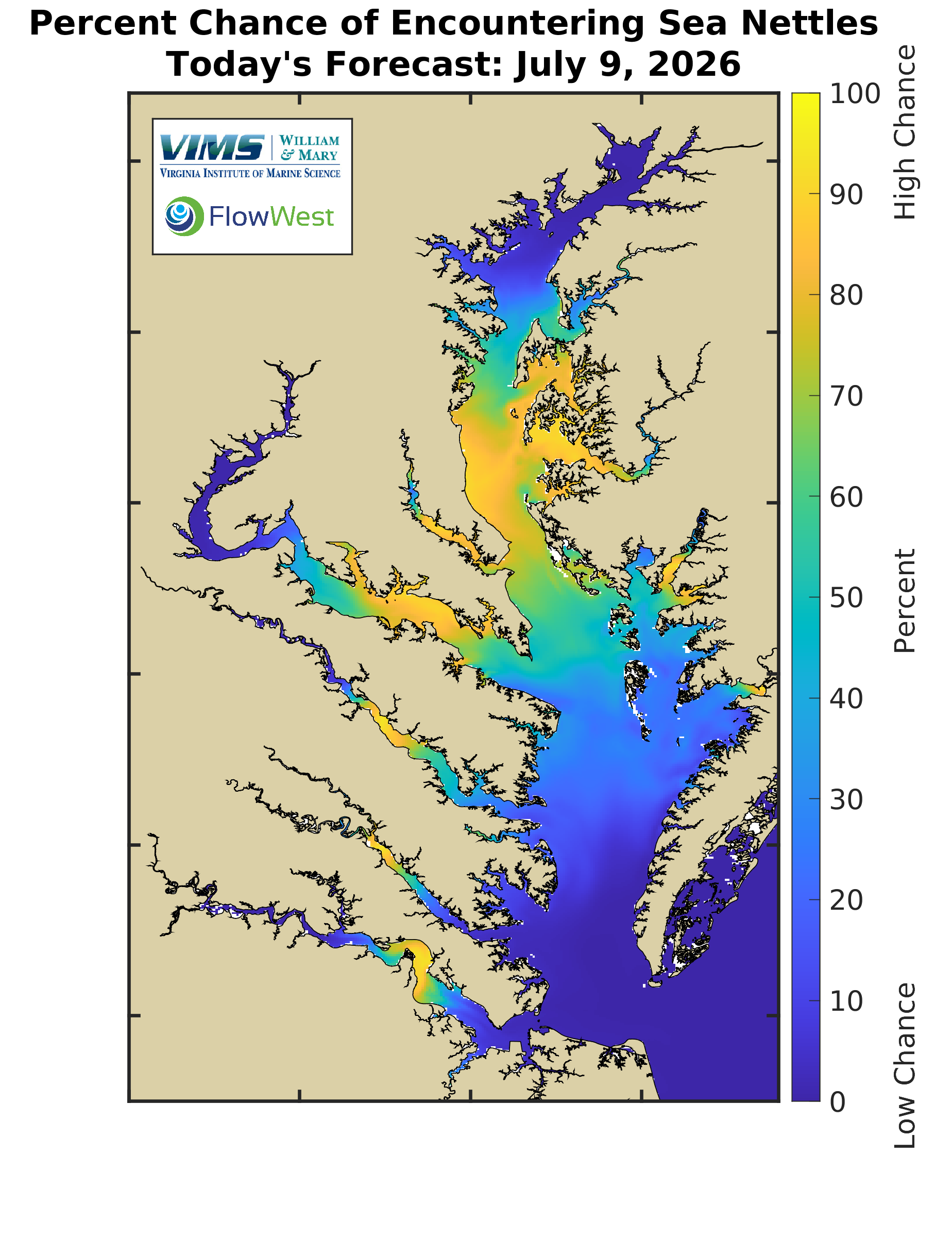
 Low
Low
NOAA Full Bay jellyfish map for today, Virginia
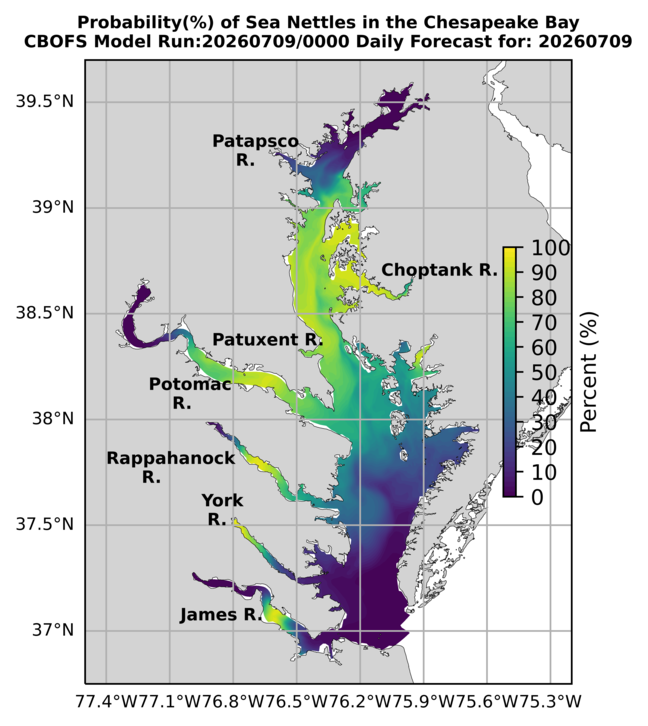
 Low
Low
VIMS jellyfish map for tomorrow, Virginia
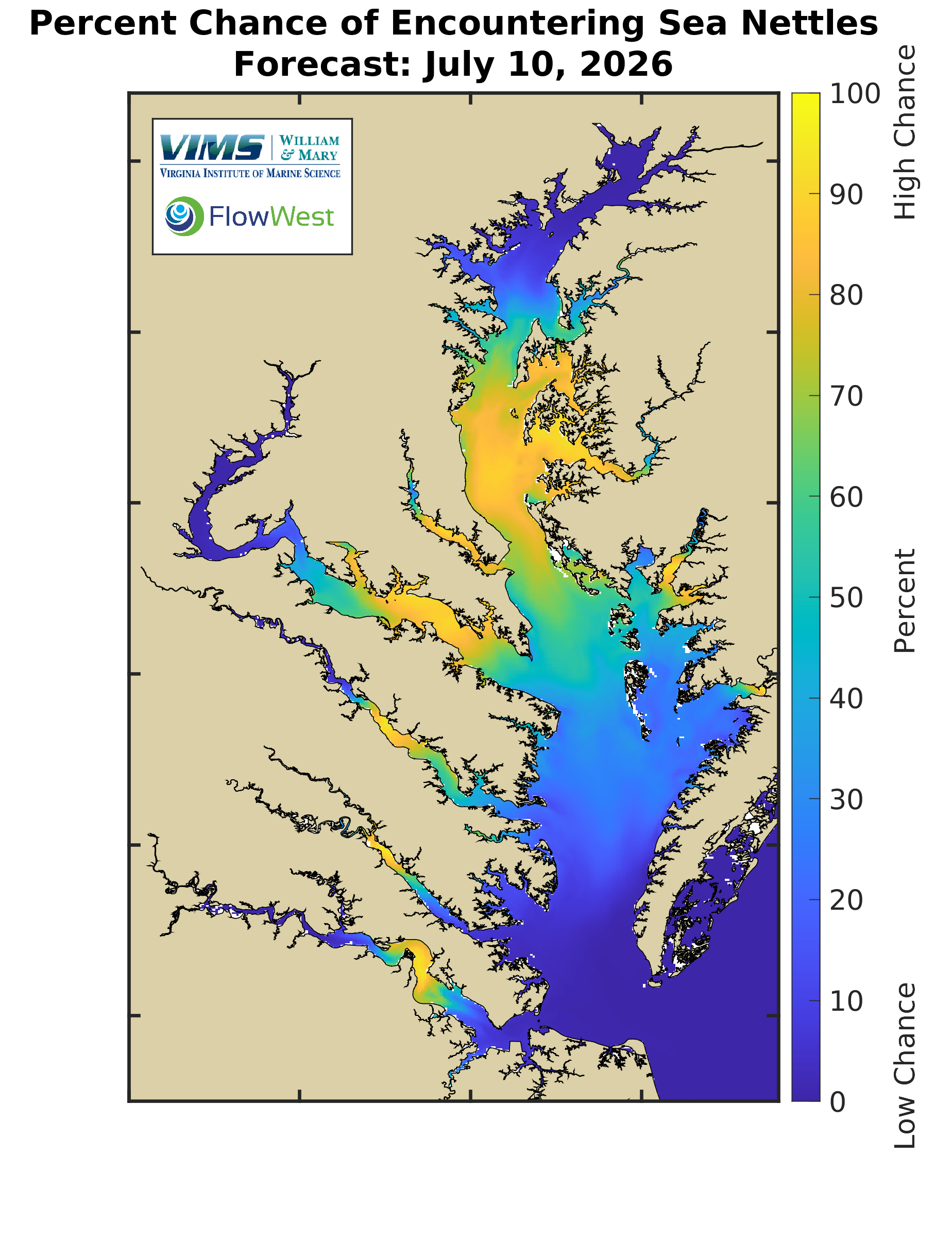 Low
Low
NOAA Full Bay jellyfish map for tomorrow, Virginia
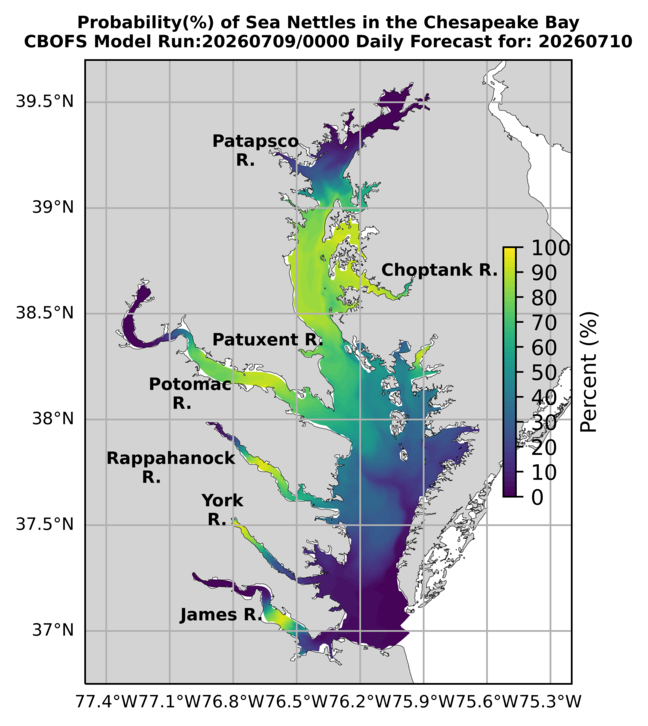 Low
Low
Your Virginia jellyfish report for today
This is a free, fast way to check whether jellyfish are likely at a Virginia beach before you swim. The maps and labels above are the Chesapeake Bay jellyfish forecast for today, translated into plain language so you do not have to read a color scale. The jellyfish we track are sea nettles, the main stinging jellyfish in the bay and its rivers.
Where the forecast comes from
We do not model jellyfish ourselves. We republish and explain the daily sea nettle forecasts from two trusted public science groups: the Virginia Institute of Marine Science (VIMS) and NOAA's National Centers for Coastal Ocean Science (NCCOS). Every day we archive their public forecast maps, read the values near each Virginia locality, and turn them into simple labels. You can read the full method on the about the data page.
How to read the labels
The labels describe a modeled chance of running into sea nettles, not a count of jellyfish in the water. In plain terms:
- Light: stinging jellyfish are unlikely, though never impossible.
- Moderate: a real chance of jellyfish. Consider a rash guard and check the water.
- Heavy: stinging jellyfish are likely. A good day to pick a lighter beach or skip the swim.
Because it is a forecast, treat it as a helpful check, not a promise. Wind and tide can move jellyfish around within a day, so always look at the water before you get in.
Who this is for
This site is for anyone heading to a Virginia beach: families, swimmers, paddlers, and crabbers who just want to know if today is a nettle day. Start with your local beach page, compare spots with the best beaches to avoid jellyfish today ranking, and learn the yearly pattern in the jellyfish season guide. If you do get stung, our sting first aid guide walks through what to do.
Virginia City and County Reports
Accomack County
Chesapeake Bay, Tangier Sound, Atlantic Ocean
Gloucester County
York River, Mobjack Bay, Chesapeake Bay
Hampton
Hampton Roads, Chesapeake Bay, James River
Isle of Wight County
James River, Hampton Roads
James City County
James River, Chickahominy River, York River
Lancaster County
Rappahannock River, Chesapeake Bay
Mathews County
Mobjack Bay, Chesapeake Bay
Middlesex County
Rappahannock River, Piankatank River, Chesapeake Bay
Newport News
James River, Hampton Roads
Norfolk
Chesapeake Bay, Elizabeth River, Hampton Roads
Northampton County
Chesapeake Bay, Atlantic Ocean
Northumberland County
Potomac River, Chesapeake Bay
Poquoson
Chesapeake Bay, Back River, Poquoson River
Virginia Beach
Atlantic Ocean, Chesapeake Bay
Westmoreland County
Potomac River
Williamsburg
College Creek, Queen's Creek, James River
York County
York River, Chesapeake Bay
Yorktown
York River, Chesapeake Bay
Alexandria
Potomac River
Chesapeake
Elizabeth River, Intracoastal Waterway
Essex County
Rappahannock River
King George County
Potomac River, Rappahannock River
Portsmouth
Elizabeth River, Hampton Roads
Richmond County
Rappahannock River
Stafford County
Potomac River, Aquia Creek
Suffolk
Nansemond River, James River
Surry County
James River
Guides
When Is Jellyfish Season in Virginia?
Chesapeake Bay Jellyfish: Types and How to ID Them
Sea Nettle Sting Treatment: Chesapeake Bay First Aid
How to Avoid Jellyfish at Virginia Beaches
About the Data: Our Jellyfish Forecast Sources
Chesapeake Bay Jellyfish Map: Today's Live Forecast
Are There Jellyfish in Virginia Beach?
Colonial Beach Jellyfish Season Guide
Virginia Beach Water Quality & Swimming Advisories
Beach Bag Sting Kit
A few simple items make a jellyfish sting easier to handle and less likely in the first place. We haven't lab-tested these ourselves — these are the picks that came out on top when we compared reviews, reputations, and Amazon track records. Here is what we suggest keeping in the beach bag during sea nettle season.
-
Sting relief gel
After Bite Xtra is the pharmacist-recommended favorite in sting-treatment roundups, with a gentle diphenhydramine formula for the burn and itch once you are out of the water.
Buy the After Bite Xtra on Amazon -
Small vinegar bottle
There's no jellyfish-specific vinegar bottle out there, so we like a small leak-proof silicone travel bottle (humangear GoToob+) you fill yourself — handy for beaches where local guidance calls for vinegar, though it's not a clear win for bay sea nettles.
Buy the GoToob+ bottle on Amazon -
Rash guard
O'Neill's Basic Skins UPF 50+ long-sleeve is the name that keeps coming up as the reliable no-frills pick for covering skin that sea nettles would otherwise reach — just size up, reviewers say it runs a little small.
Buy the O'Neill Basic Skins rash guard on Amazon Browse more rash guards -
Water shoes
The Speedo Tidal Cruiser is the well-reviewed, widely available pick for keeping feet protected from stings and shells in shallow water. (Speedo discontinued the older Surfwalker Pro 3.0, so this is its current equivalent.)
Buy the Speedo Tidal Cruiser on Amazon Browse more water shoes
As an Amazon Associate I earn from qualifying purchases. This site may earn a commission from qualifying purchases made through these links, at no extra cost to you.
Frequently Asked Questions
Are there jellyfish in the Chesapeake Bay right now?
It depends on the day and the beach. Sea nettles are mostly a summer problem, and conditions shift with heat, salt, and rain. Check the Virginia jellyfish report for today or your local beach page for the latest forecast.
Does Virginia Beach have jellyfish?
The Virginia Beach oceanfront on the Atlantic usually sees fewer sea nettles than the Chesapeake Bay, since it is a different kind of water. Bay-side spots around the city can see more in summer. See the Virginia Beach jellyfish report for today's read.
What months are worst for jellyfish in Virginia?
The middle of summer is usually the peak, when the water is warmest and saltiest. Sea nettles appear in early summer, build through mid to late summer, and fade in fall. The season guide explains the pattern.
Do Chesapeake Bay jellyfish sting?
Sea nettles do, and their sting is usually painful but not dangerous for most healthy people. Moon jellies sting only very mildly, and comb jellies do not sting at all. If you get stung, see our sting first aid guide.
Are jellyfish dangerous to dogs?
A jellyfish can sting a dog, and a beached jelly can still sting even if it looks dead. Keep dogs from sniffing or biting jellyfish on the sand, and rinse the area with seawater if your dog is stung. Call your vet if your dog seems unwell or has a strong reaction.
How do I avoid getting stung by jellyfish?
Check the daily forecast, favor early season or fall, choose fresher or oceanfront water when the bay reads heavy, wear a rash guard, and leave beached jellies alone. See the full how to avoid jellyfish guide.
What is the clear jelly that does not sting?
That is almost certainly a comb jelly, which is not a true jellyfish. Comb jellies are small, clear, and have no long tentacles, and they are harmless to swimmers. Our species guide shows how to tell the bay's jellyfish apart.
Where are jellyfish lowest in Virginia today?
It changes daily, so the best way to find a lighter spot is the best beaches to avoid jellyfish today page. It ranks Virginia beaches by the latest forecast so you can pick a calmer place to swim.
Source maps are model guidance from VIMS and NOAA/NCCOS. They are useful for a quick beach check, but they do not count jellyfish in the water and may not match conditions at every shoreline. Always check conditions when you arrive: posted lifeguard flags beat any forecast, and a purple flag means dangerous marine life has actually been seen, whatever the model says.